
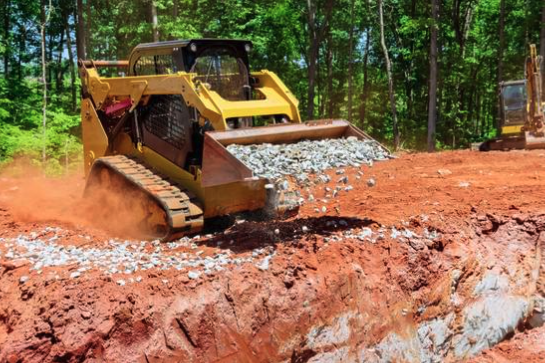
Land clearing in Beauregard Parish is the essential first step when you want to turn overgrown acreage into usable property. Whether you’re building a new home, expanding a pasture, or installing landscape features like a garden or pond, land clearing removes trees, brush, and debris to create a clean slate.
If you’ve never gone through the process before, you might be wondering what to expect. This guide breaks down the land clearing project steps.
Initial Consultation and Site Assessment
Every professional land clearing project starts with the contractor assessing the terrain to determine the best approach and what the project will require.
During a site visit, they’ll discuss your land-clearing expectations and site plans, then measure the acreage and note the tree density, soil type, and any wetlands or drainage issues that will need special attention. They also check for utilities and property lines and determine whether the project will require any permits. Beauregard Parish requires notification for complete site-disturbance projects over a certain size, including a “timber harvest” permit for forestry mulching, and your contractor should handle them for you.
After the site evaluation, you’ll receive a written quote outlining the scope, price, and timeline for the job. Most projects take anywhere from two days to two weeks to complete, depending on density and weather.
Louisiana weather plays a big role in when land clearing occurs and how long it takes. October through April is the ideal window, because the ground is firmer and the temperatures are cooler. Summer jobs are still possible, but rain can create delays; professional companies build weather days into their schedules and keep you informed.
Preparing for Land Clearing Work
Once you sign the contract, the preparation phase begins. The crew marks underground utilities, flags the property boundaries, and marks any trees you want to keep.
Homeowners can help by completing a few simple preparation tasks on their end:
- Remove personal items or equipment from the work area.
- Let neighbors know heavy equipment will be running for several days.
- Plan an alternate route to access the property if the crew needs to use your driveway.
Clear communication at this stage prevents surprises later. Don’t be afraid to ask questions or express concerns.
What Happens During Land Clearing?
Many land clearing projects use forestry mulchers rather than bulldozers and burn piles. These machines grind entire trees into mulch in one pass. The process is faster, cleaner, and leaves nutrient-rich material on the ground instead of hauling everything away.
However, for some projects, such as preparing land for construction, complete land clearing is necessary. The crew pulls out trees (including their roots) and boulders, and takes time to grade and level the land for erosion control and construction preparations.
Crews usually start on the outside of the plot and work their way in. Depending on the vegetation density, a skilled operator can clear an acre of small trees and brush in about half a day. As the project proceeds, the crew moves toward the interior, methodically pushing debris into the mulcher path and grinding stumps below grade.
If mulching isn’t possible, the crew will create large debris piles for hauling. In some cases, they might burn large debris. At every stage, the site supervisor stays in touch, sending you daily photos or quick updates so you can see the transformation taking place even if you can’t be there.
Cleanup and Final Grading
Once they finish the heavy clearing, the crew removes any debris, spreads mulch evenly, and performs light grading if requested. Many homeowners choose to leave the mulch layer in place to prevent erosion. The organic material also retains moisture and breaks down into nutrient-rich topsoil within a year or two.
Before the final walkthrough, the crew fixes ruts left by the equipment, smooths the entrance, and hauls away the remaining debris. Most jobs end with the land looking park-like and ready for seeding, building, or planting trees.
Make Land Clearing Simple With Sutton Excavation Solutions
Land-clearing costs in Beauregard Parish vary depending on project size and complexity. Forestry mulching is less expensive than excavation. However, the investment pays off quickly when you see your property clean, clear, and ready for its next chapter.
Land clearing in Beauregard Parish isn’t mysterious or stressful when you work with an experienced local contractor who knows the local soil, regulations, and weather patterns. The result is usable ground that increases property value and lets you finally use your land the way you’ve dreamed of.
When you’re ready to get started, call Sutton Excavation Solutions at (337) 426-5111 for your free site evaluation, land clearing process guide, and quote. They have cleared hundreds of acres across Beauregard Parish and know exactly how to make your project smooth from the first call to the final rake.
